How to choose a reliable floor sanding contractor
Floor Sanding Contractor - How To Recognise The Professionals
Wood flooring services aren't rocket science — that much is true. But it is a field that demands narrow, specific knowledge, proper training, and real hands-on experience, so that every job is delivered smoothly, effectively, and above all, produces the best possible result for both the floor's actual condition and the owner's specific requirements, needs, and preferences. That's precisely why neither minor nor major wood flooring projects should be treated as a DIY exercise by default — nearly all of them genuinely benefit from professional input. Recognising that is only half the job, though. Finding the right, reliable contractor to actually carry it out is the other, equally important half. Today we want to walk through exactly that — how to make the right choice, whether your floor needs a quick spot repair, a full new installation, a proper sanding and refinishing service, or simply an honest inspection of its current condition.
Before we get into what to look for in a contractor, it's worth covering something more fundamental first: how do you actually know your floor needs refinishing in the first place? This is the single most common wood flooring service homeowners end up needing, so it's worth being able to spot the early signs yourself. Hiring a professional to inspect and evaluate your floor is always the most reliable option, but if that's not possible right now, here are a couple of genuinely useful DIY checks you can run yourself.
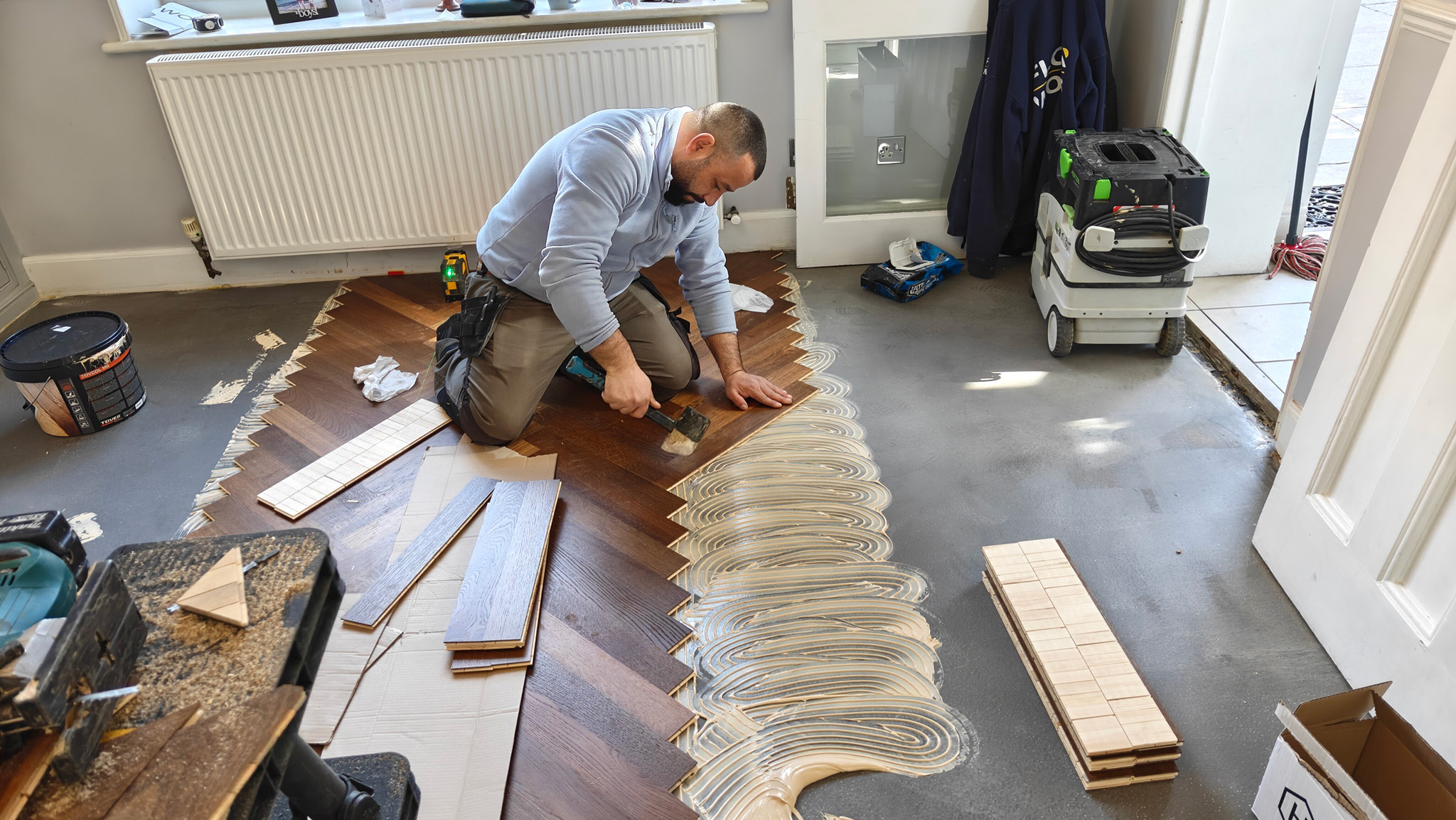
How to Tell Your Wooden Floor Needs Refinishing
Working out whether a floor genuinely needs refinishing can be a bit of a judgement call, so here are two practical, low-tech tests that give you a real answer rather than a guess.
The water test
Start by finding the area of your floor that gets the most footfall — a hallway, the space in front of a sofa, or the path between a kitchen and a dining area. This is the best place to test, because if the finish has worn through anywhere, it will have worn through here first, well ahead of lower-traffic areas.
Pour a small amount — roughly a tablespoon — of clean water onto that section and watch what happens over the next minute or so:
If the water beads up and sits on the surface as small, distinct droplets, the finish is still doing its job and refinishing isn't urgent yet.
If the water soaks into the wood fairly quickly, without beading first, the finish has started wearing thin in that spot and refinishing is likely worth planning for soon.
If the water penetrates almost immediately and leaves a visible dark stain once wiped away, the finish in that area is essentially gone, and the floor is in real need of refinishing before moisture damage sets in properly.
Wipe up any remaining water promptly afterwards to avoid causing any actual damage during the test itself, and it's worth repeating the check in two or three different spots around the room — a floor can easily have healthy finish in a low-traffic corner while it's already failing in the main walkway.
The gap depth test
This second test tells you something the water test can't: how much usable timber is actually left above the tongue-and-groove joint, which determines how many more times the floor can realistically be sanded before it reaches the point where sanding would cut into the joint itself and compromise the boards.
Find a spot where two boards meet with a slightly imperfect join, leaving a small visible gap between them. Take a sturdy piece of card — a business card works well — and push it down into that gap as far as it will comfortably go without forcing it. Mark the card with a pencil at the point where it meets the top surface of the floor, then pull it out and measure from that mark to the tip of the card. That measurement tells you how much solid timber sits above the tongue-and-groove joint at that point.
As a rough guide, if there's less than about 3–4mm of wood remaining above the joint, the floor is close to the limit of how many more times it can safely be sanded, and a professional assessment is well worth getting before any further sanding is attempted — sanding too far at this stage risks exposing or damaging the tongue itself, which can compromise how securely the boards sit together.
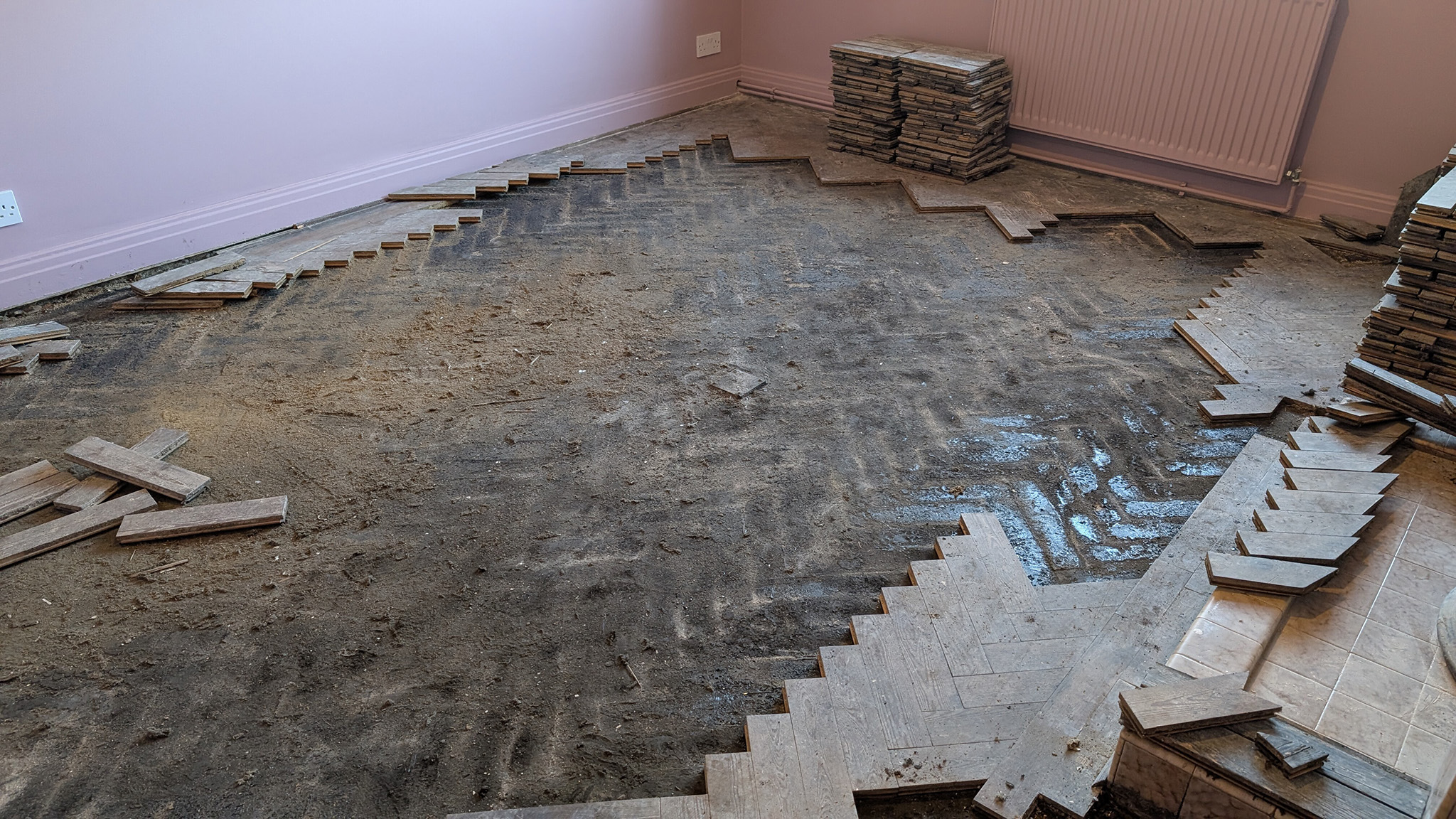
How to find a reliable flooring contractor
In order to be sure that a floor sanding contractor is reliable and will deliver a quality job, ensure flawless final results and a smooth-running process, here are the five main things to keep your eyes pealed for:
Reviews and testimonials – This is probably what most of you start with no matter the service they need. It’s unnecessary to explain the advantages of learning about other people experience with this company, but our advice is to try to separate the genuine reviews from the artificial ones. This is easy, you can just check if the profile of the reviewers looks authentic.
The website – Try to search for more information about their history, certificates and experience. In the wood floor restoration branch the finished projects are talking enough about the skills and the craftsmanship of the team behind them.
Detailed written price quote – In order to have the peace of mind that everything will be ok and you will be delivered with the smooth-running wood flooring service you are paying for, a reliable flooring professional contractor should be able to provide you with a detailed written price quote that includes all services and resources needed for your wooden floor to look amazing back again. Just make sure that all little services are included, as previously discussed with the contractor. However, along the service, sometimes happen that unexpected treatments, repairs and fixes are needed, so allow freedom for these to be included, but only after discussed with you – whether these are needed, why and how much will these cost. A written quote will work as a contract between you and the wood flooring contractor that will regulate and monitor the whole process. A good and reliable floor sanding contractor has nothing to hide from you and will be more than happy to provide you with a written quote.
The machines used by the company – This is important, it’s good to know that the latest equipment can achieve more efficient results. You probably are asking how to know if these sanders are good or not, it’s enough if they are from well-known brands, this can be considered as a proof of quality. Another thing good to know about the equipment is that nowadays every self-respected and established contractor is using dust-free machines.
The finishing product – Even if the fitters transform your flooring successfully if they don’t use a high-quality sealant these results won’t be kept for a long time. The main purpose of the finishes is to create a protective film covering the surface of your flooring, as you can suggest if they are with lower quality, they will wear faster and easier. Most of the issues that can ruin the appearance of a wooden floor are usually visible in the top layer of the finish. If you have the option to choose the product on your own, brands like Kahrs, Bona, Junckers or Osmo won’t disappoint you.


