6 modern ideas for wooden flooring
In case you have decided to renovate your old flooring, or buy a new one, take a look at how you can modernize it with little to no extra cost.
There's no other flooring option that looks as elegant, beautiful, and stylish as wood flooring. That's not just our biased opinion — it's one shared and backed by hundreds of thousands of people around the world. Natural wood flooring helps establish a genuinely special, cosy, warm atmosphere at home, while looking equally professional, sleek, and beautiful when installed in commercial and business premises. Real wood floors are natural, intriguing, and genuinely exciting, available in an impressive variety of colours, textures, and patterns. On top of that, modern technology and professional technique give you the opportunity to dramatically transform an existing hardwood floor's appearance — through staining, changing its surface texture, or simply enhancing the natural character already there. Real wood floors are also a genuinely long-lasting, hard-wearing investment, capable of surviving up to a century or more with proper, regular sanding and refinishing along the way. It's genuinely not an exaggeration to say this type of flooring can make a house feel like a home in a way few other materials manage.
Today's market offers a genuinely impressive range of wood flooring options — solid or engineered timber, the different installation styles including parquet, and a huge range of colours and textures on top of all that. With so much choice available, it's entirely understandable that picking the right wooden floor for your home, and getting the whole household on board with the choice, can feel overwhelming. To help narrow things down, here are six genuinely inspirational ideas for modern wood flooring layouts.
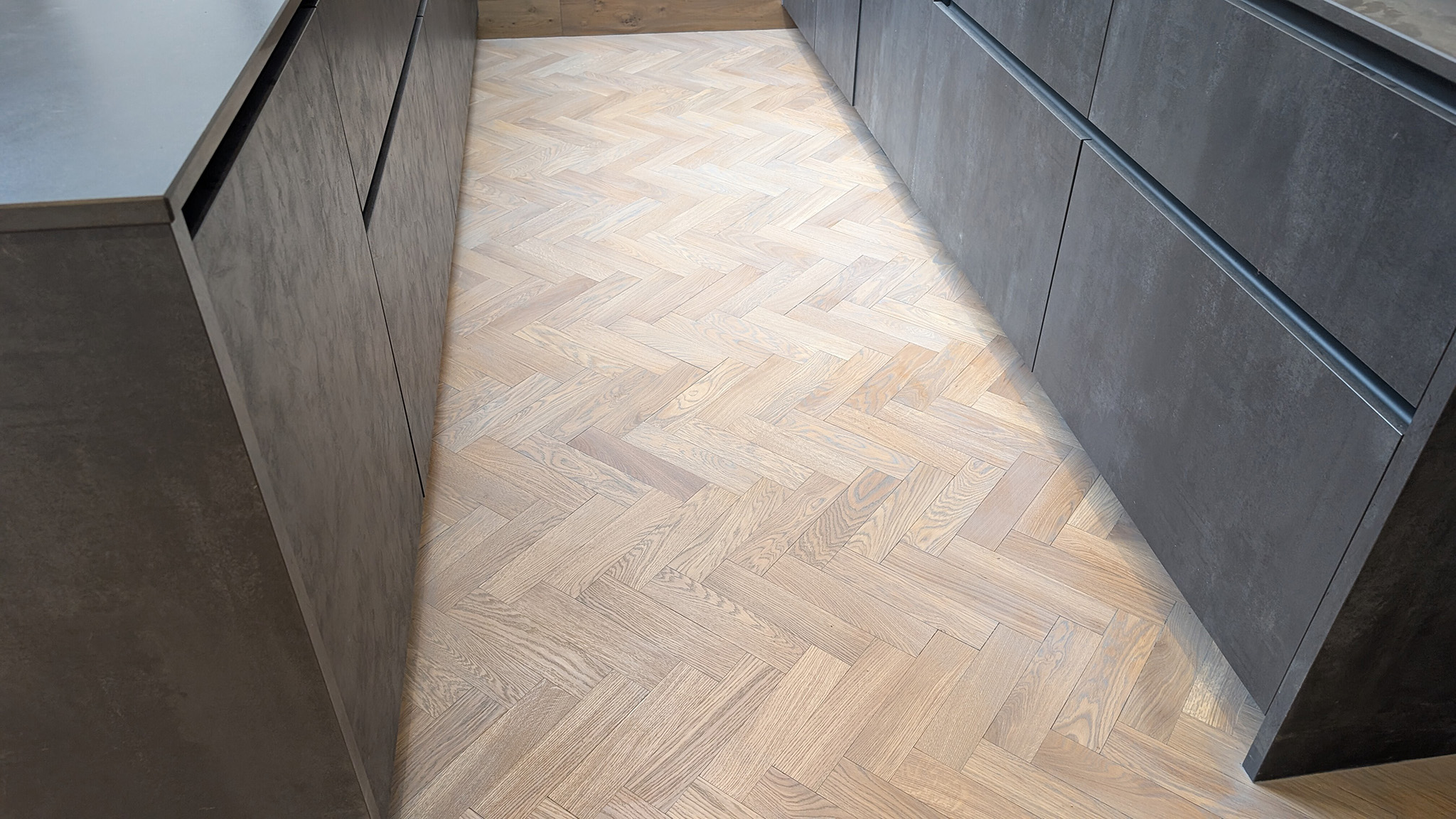
1. Modernise the classics
Classic parquet patterns like herringbone and chevron remain the go-to choice for anyone who loves traditional wood flooring. The herringbone pattern that was so popular through the 1960s and 70s was traditionally built from narrow, small wooden boards — but those days are largely behind us. If you love the classic look but want a more contemporary edge, look for modern herringbone laid with wider, broader boards instead of the original narrow strips. This bolder, more graphic take on a golden-age classic pattern is a genuine product of modern manufacturing capability as much as changing taste — wider boards are more dimensionally stable to produce at scale than they once were, and the resulting pattern reads as considerably calmer and more contemporary in a room, since fewer, larger repeats mean less visual busyness than the tightly packed narrow-board version. Wider-board herringbone also suits larger, more open-plan spaces particularly well, where the bolder scale of the pattern doesn't get lost the way a fine, narrow-board version can in a big room. This blending of classic pattern and modern proportion has genuinely accelerated over the past few years, and it shows no sign of fading as a trend.
2. Accentuate natural textures
Timbers with a rich, dense grain — oak and chestnut in particular, left in their natural, unstained tone — bring a genuinely impressive, distinctive character to any room, the living room especially. These denser species suit a huge range of interior styles, where every knot, grain variation, and natural mark tells its own visual story and helps build a genuinely cosy, lived-in atmosphere rather than a flat, uniform surface. Beyond leaving the timber in its raw, natural finish, surface treatments like hand-scraping or wire-brushing take this further still, physically opening up and exaggerating the grain texture underfoot as well as visually, for a floor that reads as genuinely tactile rather than just decorative.
3. Use colour to convey a message
Contrast is where you can really let your imagination run and set genuinely bold design ideas free, pairing strong colour choices with eye-catching textures to create a look that's entirely your own. Playing with colour and texture together is one of the most popular directions in wood flooring design right now, and it's a genuinely reliable way to build a one-of-a-kind atmosphere in any room of the house. A striking two-tone floor — pairing a dark stained border with lighter central boards, for instance, or contrasting stained herringbone insets against a plain-laid surrounding floor — adds real drama and visual energy to a space. If you want a structured way to think through which colours actually pair well together on a wood floor, our guide on colour combinations for wood flooring walks through several tried-and-tested pairings in more depth.
4. Bring exotic and modern together
American walnut is a genuinely beautiful, durable wood species, and a popular choice for anyone after a distinctive, still-natural-feeling floor. Its appeal largely comes from the striking natural contrast between the darker heartwood at the centre of each board and the paler sapwood toward the outer edges — a genuine, unforced colour variation that no stain can quite replicate, since it comes from the tree's own growth structure rather than a surface treatment. Whether you're drawn to its colour depth, its richness, or simply its understated elegance, American walnut adds real character and atmosphere to virtually any room it's installed in, and its distinctive heartwood-sapwood contrast tends to look most striking in wider boards, where each individual plank has more room to show off that natural variation.
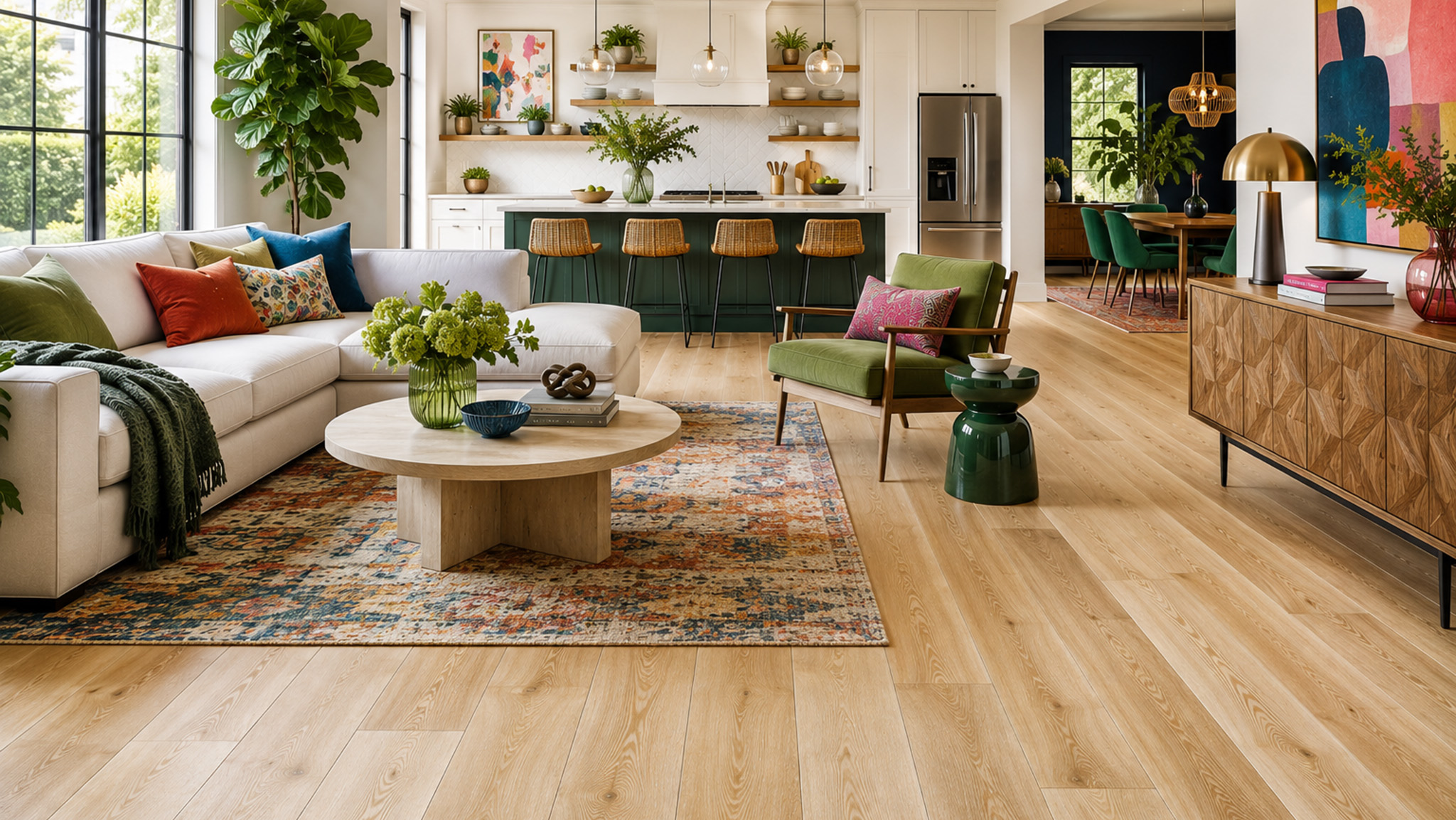
5. Respect the traditions
Aged, whitened, or lightly white-stained floors, designed to evoke an antique or vintage character, remain a firm favourite for a reason. With the wide range of treatments and techniques now available in the wood flooring industry, it's easy to see why the aged-wood aesthetic has stayed so popular — from a genuine reclaimed timber floor with real history in its grain, to a new floor deliberately distressed, wire-brushed, and lightly white-washed to mimic that same worn, storied character. If you want to go the white-wash route specifically, our piece on achieving a proper white-washed or grey wood floor finish covers how that look is actually achieved with modern primer systems, and our staining guide is worth a read if you're deciding between staining and a full colour change. An antique-style floor genuinely adds warmth and cosiness to a room, and works especially well in a bedroom, where that softer, lived-in feel suits the space's purpose particularly well. If authenticity matters more to you than convenience, genuine reclaimed wood flooring — sourced from old barns, warehouses, or salvaged buildings — is also worth considering, and comes with a level of real character and history that even the best distressing technique can only approximate.
6. Geometric creativity
Chess-style, contrasting wood "tiles" are a genuinely beautiful, tried-and-tested classic pattern, and remain a favourite for good reason. This kind of bold geometric layout brings real visual energy to a living space, and it's not limited to a simple two-tone checkerboard either — basket-weave patterns and Versailles-style panels are both close relatives of this same geometric family, each offering a slightly different rhythm and scale of pattern. As with the checkerboard classic, there's plenty of room to make it genuinely your own by experimenting with colour and texture combinations across the individual panels or tiles, rather than sticking to a single uniform tone throughout.
Whichever direction you land on, it's worth remembering that a well-installed, well-chosen wood floor is a long-term investment rather than a one-off decision — and one of the genuine advantages of solid and many engineered wood floors is that the finish, colour, and even the surface texture can all be revisited and changed again down the line through sanding and refinishing, long after the initial installation. So if your taste evolves over the years, the floor underneath doesn't have to hold you back from following it.


