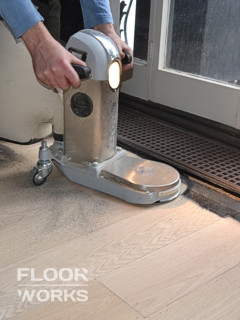
Wood floor sanding for care homes
Wood floor sanding for care homes
Arranging a wood floor sanding service for a care home might sound like a slightly controversial idea at first. Care homes come with their own specific requirements, and protecting the comfort and peace of the residents is usually the top priority above almost everything else. Sanding, meanwhile, has a long-standing reputation as a messy, noisy, disruptive process — not exactly compatible with the calm, settled daily routine most care homes work hard to maintain. That reputation would have been entirely fair a few years ago. Today, thanks to genuinely better equipment, better-trained specialists, and far more flexible service delivery from experienced contractors, wood floor sanding no longer has to be the disruptive ordeal residents and staff once had to grit their teeth through.
We're not treating care home sanding as some special exception to the rule here, either — the service delivered in a care or nursing home isn't fundamentally different from sanding in any other busy commercial, public, or heavily-used residential setting. In fact, wherever you have a lot of people moving across a wood floor regularly, you can expect wear and tear, and the common issues that come with it, to show up faster and more intensely than in a typical quiet household.
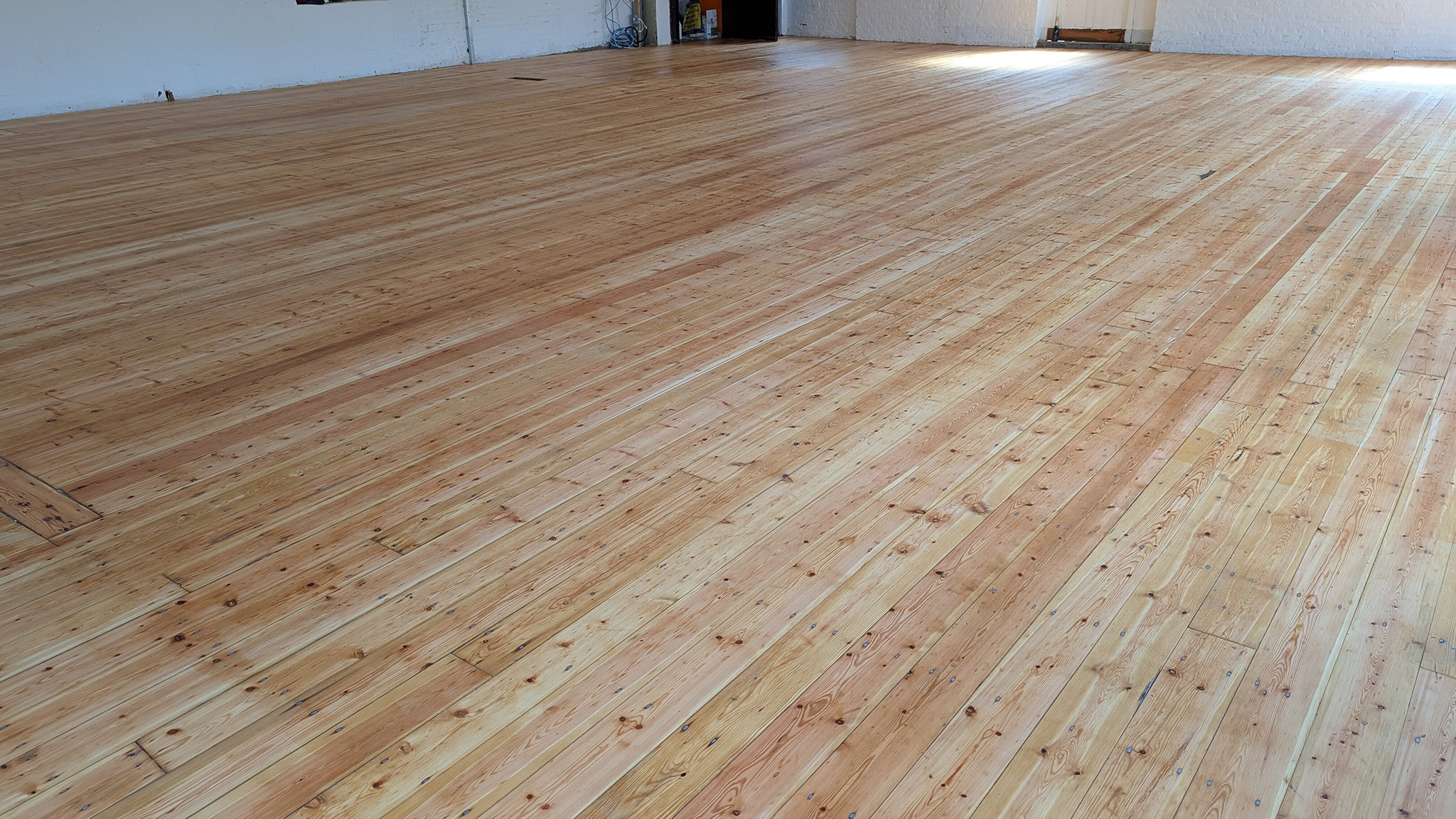
Is wood flooring actually a good choice for care homes?
Wood flooring comes with a genuinely long list of advantages over other flooring types, and several of them line up particularly well with what care homes are trying to achieve.
Appearance and atmosphere. Wood carries a classic, elegant, genuinely cosy character that helps a space feel homely rather than clinical — and given that one of the core goals in care home design is making residents feel safe, comfortable, and genuinely at home, that's a real point in wood's favour over more institutional-feeling flooring options.
Durability and stability. Wood flooring is notably solid, stable, and hard-wearing, and every flooring material handles wear and tear differently. Wood is naturally more resistant to a range of common issues than several other options on the market, and modern engineered wood floors in particular are considerably better at resisting humidity, moisture, and everyday temperature fluctuations than the hardwood floors of a few decades ago — a genuinely useful improvement in a busy, heated building with constant footfall.
Resilience and repairability. Real wood has natural shock resistance and generally copes well even in a demanding, high-traffic environment without losing its structural stability or overall condition dramatically — and where damage does occur, it can usually be repaired rather than requiring a full replacement, which is where sanding comes back in as the core tool for restoring both appearance and condition.
Hygiene. Real wood is a naturally hygienic material. Unlike carpet, it doesn't trap dust, dirt, grime, or bacteria in the way a fibrous surface does, and it doesn't build up the kind of deep, hard-to-remove dirt that carpet accumulates over time — a genuinely important consideration in a care setting where infection control and easy, thorough cleaning matter more than in an average home. Day-to-day maintenance is straightforward too: regular vacuuming plus occasional mopping to lift the odd stubborn stain is generally enough to keep a wood floor properly clean, even in a busy, high-traffic building, without demanding excessive time, effort, or specialist cleaning products.
Practical considerations for care settings specifically. A couple of factors are worth flagging beyond the general case for wood flooring. Slip resistance matters more here than almost anywhere else, given the number of residents with mobility aids, walking frames, and wheelchairs in daily use — a properly finished wood floor with an appropriate anti-slip additive in the sealant can meet this need well, and it's worth discussing specifically with whichever contractor carries out the work. Glare and visual contrast are worth considering too, particularly for residents living with dementia, for whom a highly glossy, reflective floor can sometimes read as wet or disorientating underfoot — a matte or satin sheen finish is generally the more sympathetic choice in these environments over a high-gloss one.
Why wood floor finishes wear down, and why refinishing matters
The main driver behind most wood floor issues is simply high traffic and heavy footfall. Normally, a wood floor carries a protective finish that preserves its colour, texture, and overall condition against the everyday hazards of scratches, permanent stains, colour darkening or bleaching, drying out, ageing, and dents. Every finish on the market does this job well when it's intact and properly maintained, protecting the bare timber underneath from the wear and tear of daily use — particularly in a busy setting like a care home. Over time, though, every finish gradually wears down and needs reapplying to keep that protection genuinely effective. In high-traffic environments, refinishing is naturally recommended on a more frequent cycle than in a quiet family home, though the exact interval always depends on the specific floor's condition and use.
It's worth being clear that refinishing on its own, without sanding first, generally isn't possible or advisable — you can't simply layer a fresh coat over a genuinely worn, damaged finish and expect a lasting result. Sanding is the process that actually removes the aged, worn, distressed layer of old finish and, where needed, a thin layer of the bare timber underneath, to achieve a smooth, even, imperfection-free surface ready for a fresh coat. Across the working life of a solid wood floor, this can typically happen somewhere in the region of six to seven times, depending on the original thickness of the boards — and, done properly, it's genuinely a major part of how a hardwood floor can be kept looking its best for a century or more of use, which is a realistic lifespan for a well-maintained solid timber floor. Sanding is carried out with a sanding machine fitted with a range of abrasive belts at different grit densities, moving from coarse to fine as the job progresses. It's true that the process generates a genuine amount of sawdust and debris, which is exactly where sanding earned its old reputation as a messy job — but modern equipment, fitted with proper dust extraction, now captures the vast majority of that dust as it's produced, which is precisely what's changed the picture so significantly over the last decade or so.
Once sanding is complete, it's the right moment for refinishing — and there's a good technical reason for that specific order. Wood remains a genuinely porous, natural material even once it's been cut and laid as flooring, and sanding doesn't just even out the surface; it also opens up that natural pore structure, allowing the finishing product to soak in and be absorbed far more effectively than it would on an unsanded surface. That's what gives a properly finished floor real strength and protection both on the surface and from within the timber itself — a combination that's genuinely hard to beat. In a setting like a care home, with more people moving across the same floor daily than a typical family household, and correspondingly faster wear and reduced resistance to everyday issues, this kind of periodic sanding and refinishing becomes even more important, not less.
Wood floor sanding in care homes, done properly
Realistically, the biggest hesitation anyone has about sanding in a care home is disruption. Respecting the comfort, calm, and peace of every resident is genuinely essential, and floor sanding, by its nature, isn't an inherently quiet or unobtrusive process. A day with sanding work happening down the corridor is certainly not a typical day — but with the right approach, disruption can be kept genuinely minimal, and the overall answer to "is this suitable for a care home" is a clear yes, provided the work is planned and carried out with residents' welfare kept firmly as the priority throughout. Here's what a genuinely considerate, professional sanding contractor should be able to offer:
Respect. Treating every client with genuine respect matters in any trade, but a care or nursing home comes with its own house rules, routines, and sensitivities that go well beyond a typical residential job. A contractor who takes the time to properly understand and work within those boundaries — rather than simply turning up and getting on with it — is one genuinely worth trusting with this kind of project. Delivering that consistently comes down largely to flexibility.
Flexibility. Flooring work isn't a standard nine-to-five job at the best of times, and working evenings, early mornings, or occasional night hours is a normal part of the trade already. For a care home specifically, a genuinely reliable contractor should be willing to build a tailored schedule around the establishment's actual routine — working overnight while residents sleep, for instance, or across weekends, to keep disruption to daily life as low as realistically possible. Where the schedule is genuinely tight, working at a faster pace (without ever compromising on quality) may also be necessary, which is usually achieved through the next point.
Adequate staffing on site. Not every contractor is set up to bring a larger team onto a single job. A standard sanding job might take roughly a day for an averagely sized room, sometimes more or less depending on the floor's condition — but in a care home, minimising the total disruption window is a genuine priority, and bringing in additional trained staff for the duration is usually the most effective way to compress the timeline without cutting corners on the finished result.
Modern, well-maintained equipment. Advanced equipment isn't strictly a requirement for a good result, but it makes a genuinely significant difference to how clean, quiet, and low-disruption the process actually is — particularly the quality of a machine's dust extraction system, which matters far more in a care setting than almost anywhere else. Vulnerable residents, some with existing respiratory conditions, are considerably more sensitive to airborne dust and fumes than the average household, so a contractor's dust-extraction standard and their choice of low-odour, low-VOC finish are both genuinely worth asking about directly before committing to a project of this kind. It's also worth confirming that the contractor is properly insured and experienced with commercial or public-sector work — our guide on choosing a reliable flooring contractor covers what to check for in more depth, and for care homes specifically, verifying prior experience with similarly sensitive environments is well worth the extra question before signing off on any project.